

I dag er over 30 personer fra en rekke medlemsinstitusjoner samlet på Framsenteret for å bygge kunnskap og samarbeid rundt bruk av kunstig intelligens i forskning.
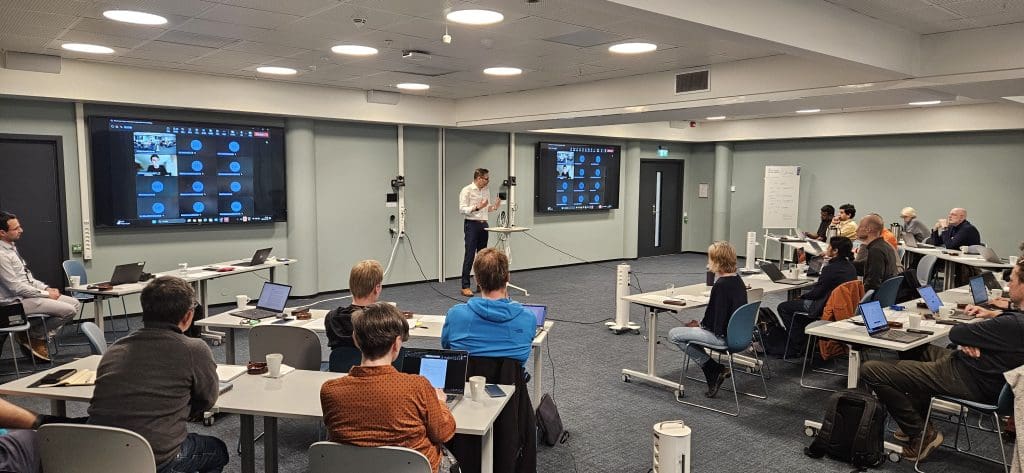
-Det er viktig at vi samles og tar eierskap og ansvar slik at vi kan benytte KI på en riktig måte i klima- og miljøforskninga, sier direktør i NILU. Tomas Nordlander.
-Vi ser utfordringer, men det er mange positive ting. Vi må være bevisst de potensielt negative virkningene, sa Olof Mogren fra RISE Reserarch Institutes of Sweden.
Mogren var først ut i en serie med foredrag og innspill. Han fortalte blant annet om hvordan RISE benytter KI i overvåking av sjøfugl og våtmarker.
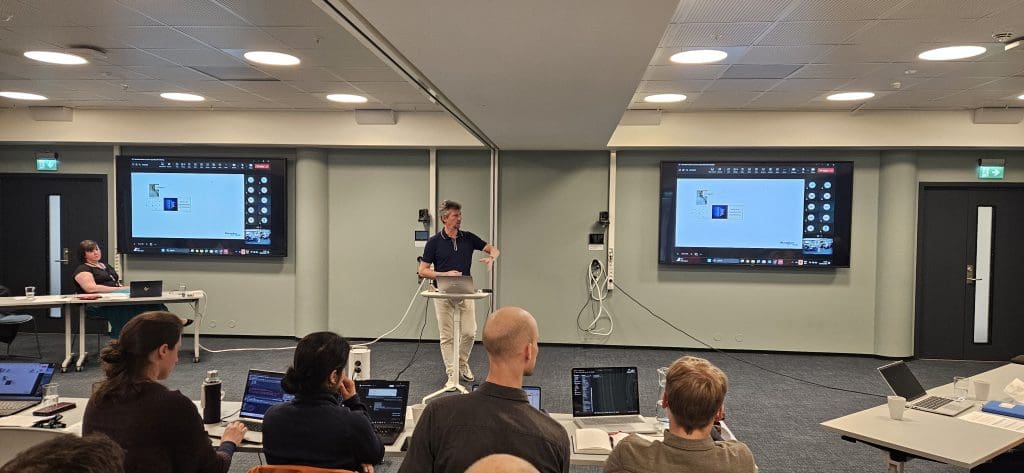
Målet med workshopen er å utnytte synergien av samarbeidet i Framsenteret og på den måten få bedre kunnskap om KI. Konkret skal det ende opp i en anbefaling for hvordan KI kan integreres i forskningssamarbeidet.
—
How can AI help climate research?
Today at the Fram Centre, over 30 people from different institutions gathered to build knowledge and cooperate around the use of artificial intelligence (AI) in research.
-It is important that we come together and take ownership and responsibility so that we can use AI in the right way in climate and environmental research, says NILU CEO Tomas Eric Nordlander.
-We see challenges, but there are many positive things. We must be aware of the potentially negative effects, said @Olof Mogren from RISE Research Institutes of Sweden.
Mogren was the first in a series of lectures and contributions. He spoke, among other things, about how RISE uses AI to monitor seabirds and wetlands.
Lionel Camus from Akvaplan-niva exemplified the use of AI in marine research, followed by several other good contributions from SINTEF, Norsk Polarinstitutt • Norwegian Polar Institute, and NILU.
The goal of the workshop is to utilize the synergy of the collaboration between the different institutions at the Fram Centre and, in this way, gain better knowledge about AI. Specifically, it will end in a recommendation for how AI can be integrated into research collaboration.
Photos: Helge M. Markusson/Fram Centre